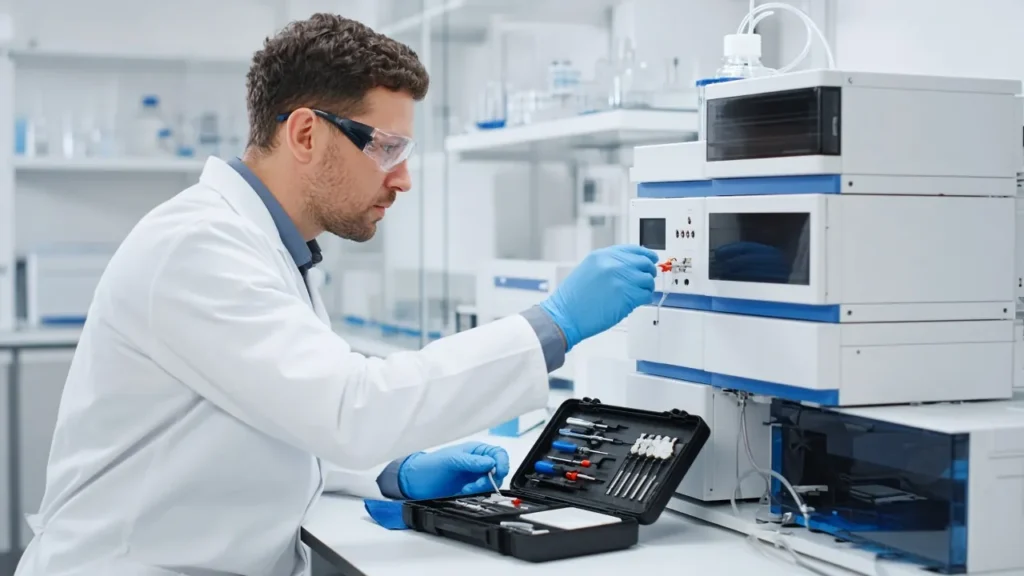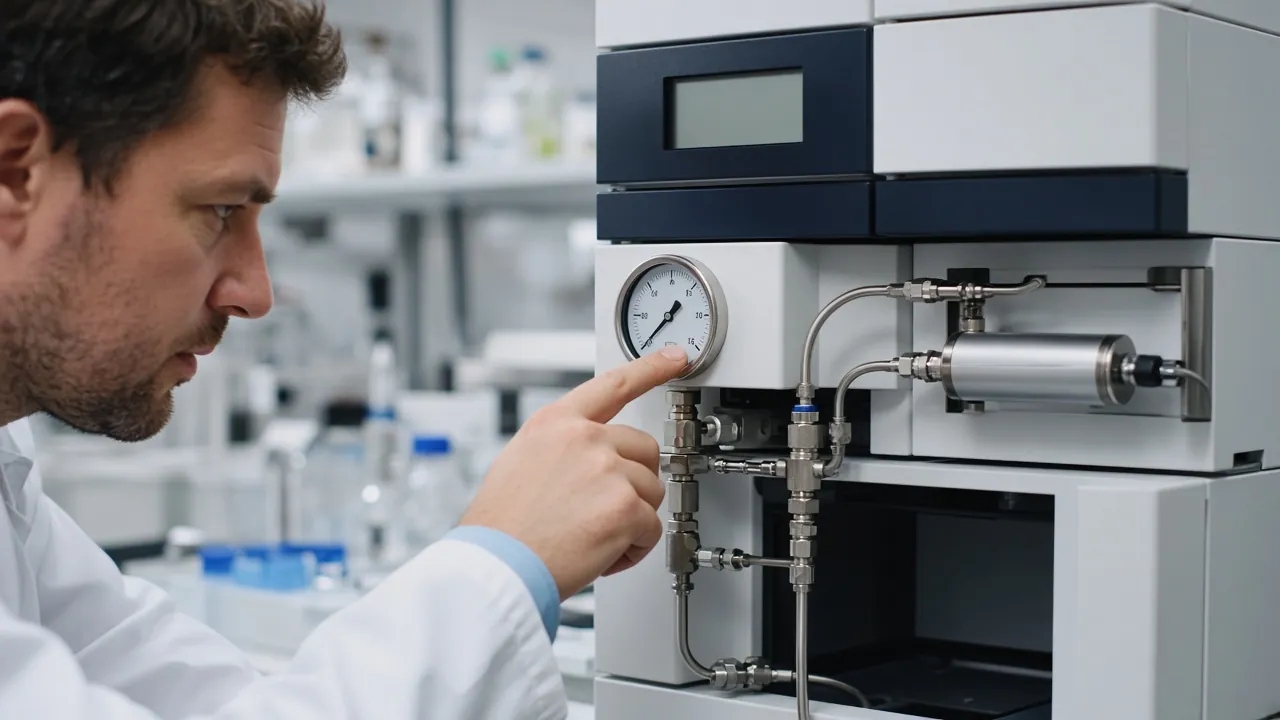
Two of the most common chromatography complaints are “the pressure is wrong” and “the baseline is noisy.” They can appear on the same day. They are not the same fault, and treating one as the other wastes the first hour.
Pressure describes the pump or the gas control fighting the column and the tubing. Baseline noise describes the detector signal when little or nothing of interest is eluting. Fix the supply and the leak path before you chase the detector.
Read the symptom once
On an HPLC, write down four numbers before you touch a fitting: flow, mobile phase, column temperature, and pressure. Compare them with the last good run. A large pressure change with the same method points at a restriction, a leak, air in the pump, or the wrong column. A normal pressure with a jagged baseline points at the detector, bubbles reaching the cell, or the mobile phase.
On a GC, note inlet pressure, the gases that should be on, oven temperature, and whether the detector reports ready. An inlet pressure error is a pneumatic problem. A noisy baseline with normal inlet pressure is a detector, gas-quality, or contamination problem.
If pressure is the problem
Stop the flow or let the GC go idle before you open a fitting. Never open a liquid fitting under pressure.
For a high HPLC pressure, bypass the guard column first. If pressure remains high, remove the analytical column and connect the tubing with a proper union. Pressure should fall. If it does, the restriction was the guard or the column. If it does not, isolate one section at a time back toward the pump. Do not backflush a column unless its instructions allow it.
For low or zero HPLC pressure, look for leaks, an open prime valve, an empty bottle, or air in the inlet. Purge until the solvent stream is continuous.
For a GC pressure error, confirm the cylinder or generator is actually delivering gas, then look for a septum leak, a column ferrule leak, or column dimensions in the method that do not match the column in the oven. If you smell gas, or the instrument has shut down on a leak, stop. Do not use a flame. Ventilate and call a technician. Hydrogen in a closed oven is a fire hazard.
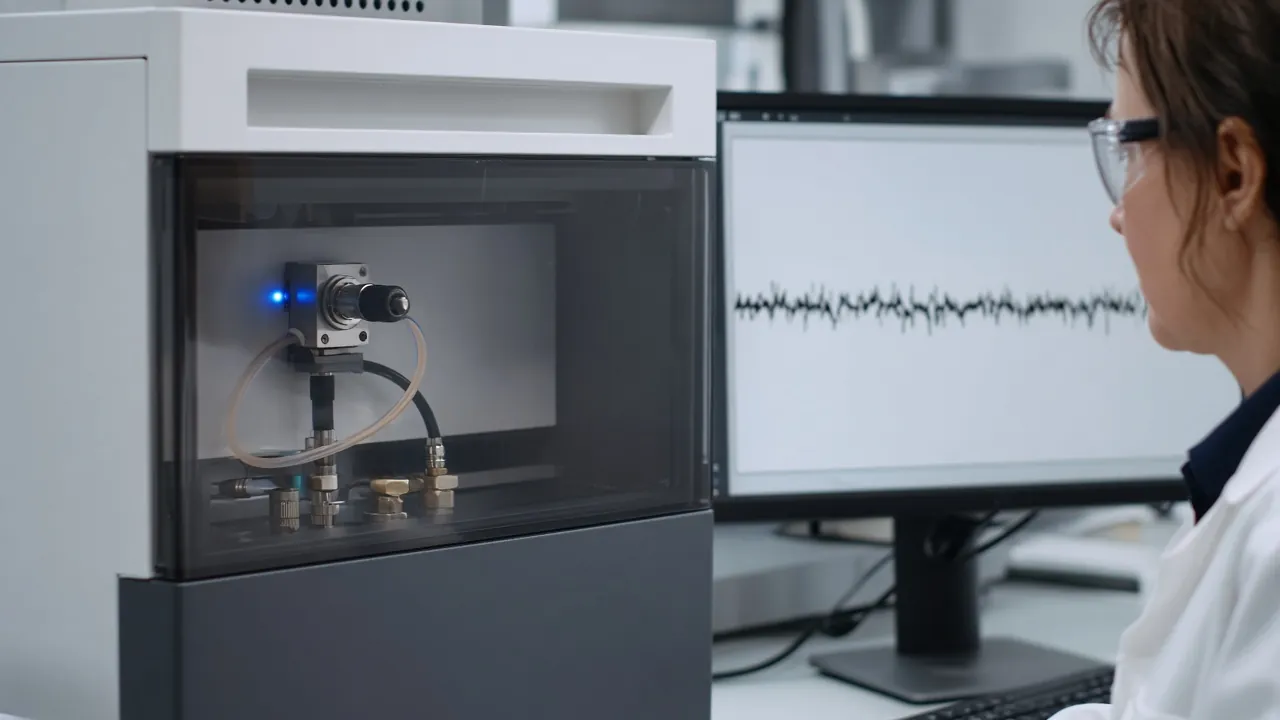
If the baseline is the problem
Only start here when pressure or inlet gas is already normal.
On HPLC, degas and purge. An aging UV lamp and a dirty flow cell are the next routine suspects. Spikes that come and go often track bubbles. A slow drift often tracks temperature, a lamp warming up, or a column that is not equilibrated. Do not dismantle a flow cell on the bench.
On GC, cool the oven to the usual start temperature. Noise that disappears when the oven is cool often tracks column bleed or inlet contamination. Noise that remains points at detector gases, a dirty jet, an unstable flame, or gas purity. A smooth rise at the top of a temperature program can be normal bleed. A sudden noisy baseline is not. Replacing the septum and liner is a reasonable first consumable step after dirty samples. It is not a fix for a gas leak.
When the two interact
Bubbles can upset both pressure and the baseline. On HPLC they usually enter before the pump, from an empty bottle, a loose inlet, or solvent that was not degassed. Purge first. If bubbles return immediately and pressure ripples, the pump seal or check valve may be leaking. That is no longer a bottle problem.
A partially blocked HPLC inlet frit can make pressure wander and the detector look noisy because the flow is not steady. Settling the pump comes before a lamp replacement.
When to call
Call Mahut on +968 71130316 if:
- Pressure stays high after the column is removed
- Pressure will not build after a proper prime, or a leak is inside the pump
- A GC leak shutdown is active, or you smell gas
- Baseline noise remains after degassing or after a new liner and septum, with gases and pressure confirmed
- The detector will not ready, or the pump or autosampler stops on a fault
The full short notes for these cases, including missing peaks and retention-time shifts, are in Mahut’s HPLC and GC knowledge base. Use them once. If the system is not restored, the next step is a corrective visit, not a second round of the same fittings.